
TALEA – Green Cells Leading the Green Transition
Resilient cities growing from the ground up
About TALEA
Resilient cities growing from the ground up
The TALEA project aims to respond to the phenomenon of heat islands in cities through an innovative approach that combines technology, nature, and citizen participation to transform public spaces into inclusive and accessible climate shelters.
There are three pilot areas in Bologna:
- Two in the City Centre - North Area;
- One in the Fossolo Area (Savena District).
The three components of TALEA are:
1. Public space: TALEA’s interventions redesign public space, experimenting with new
methodologies to create green corridors in cities that will become climate shelters for citizens and
the most vulnerable people and mitigate the effects of urban heat islands.
2. Technology: The areas of intervention will be co-designed and monitored with new digital and
technological tools, also accessible to citizens.
3. Social inclusion: The project aims to involve the most vulnerable groups in the heat island
phenomenon, responding to their needs and promoting a just and inclusive ecological and climate
transition.
What does TALEA do?
- Integrates nature-based solutions with digital technologies to monitor, simulate, and mitigate the effects of climate change.
- Engages citizens in all phases: co-design, monitoring, and evaluation.
- Uses climate, social, and environmental data to guide informed and transparent public decision-making.
- Builds an urban digital twin, simulating the effects of transformations to enhance their effectiveness.
The TALEA Platform
The project’s digital platform is an open repository on GitHub where the following resources are collected and shared:
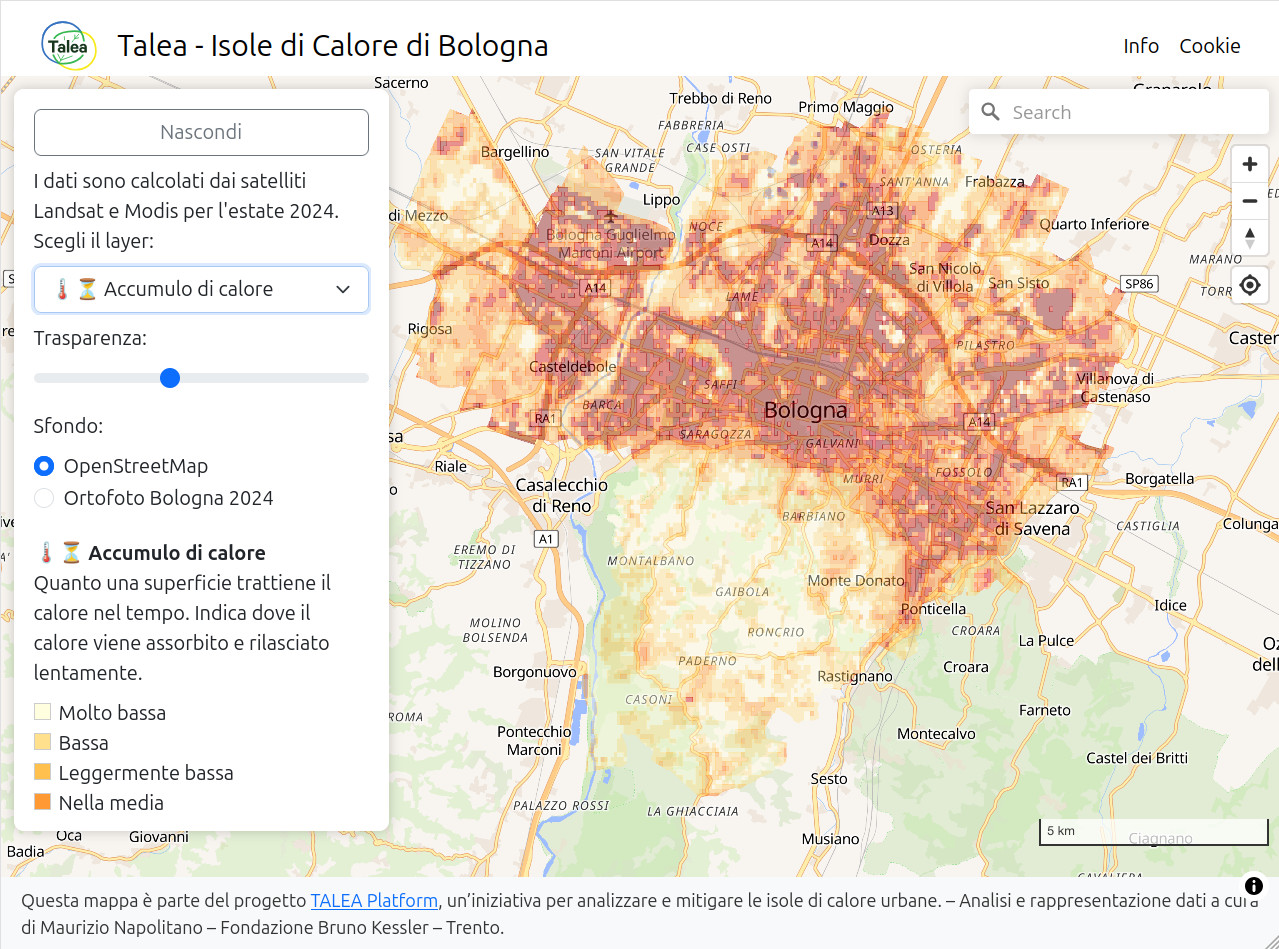
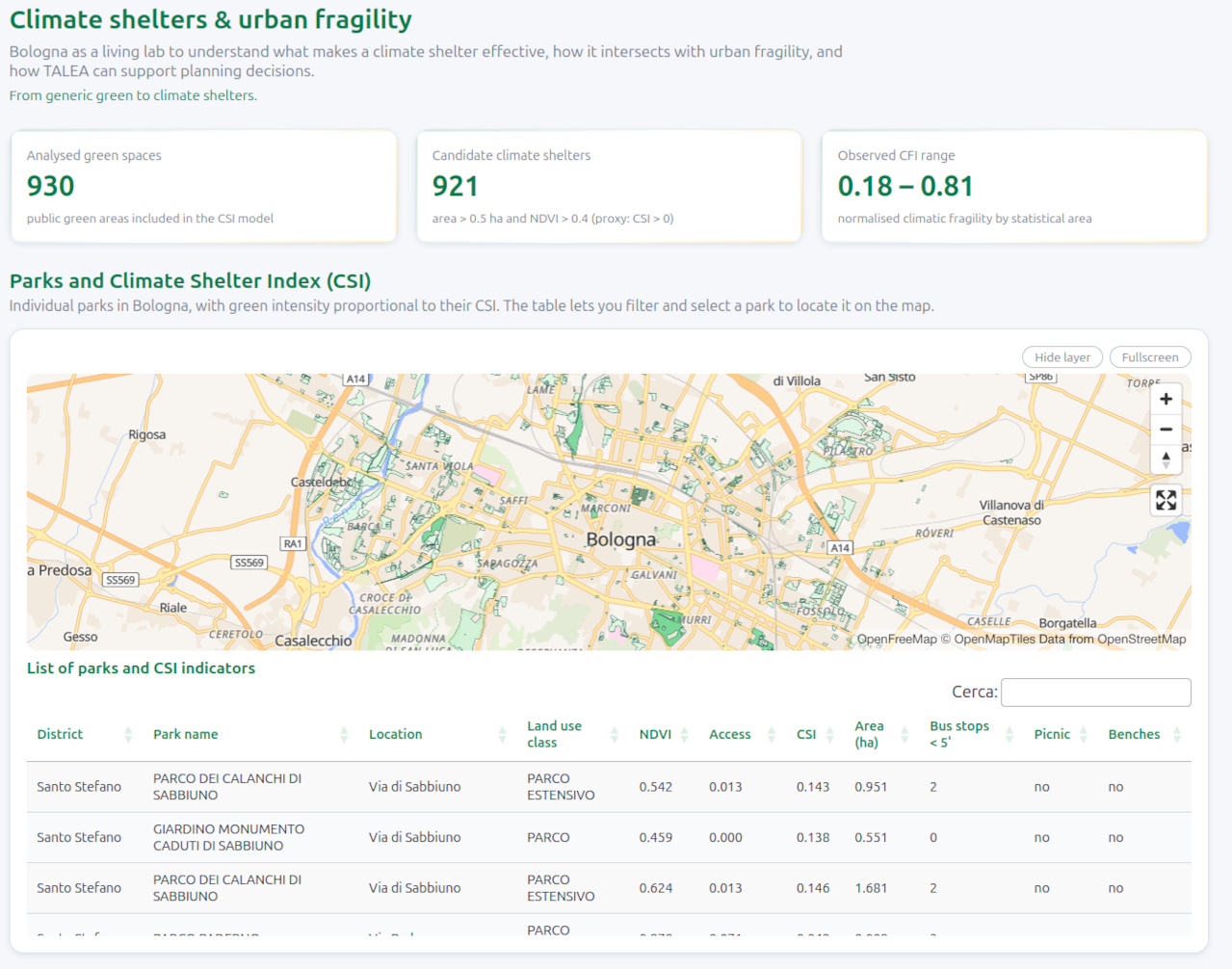
- Interactive maps and analyses of urban heat islands and climate shelters
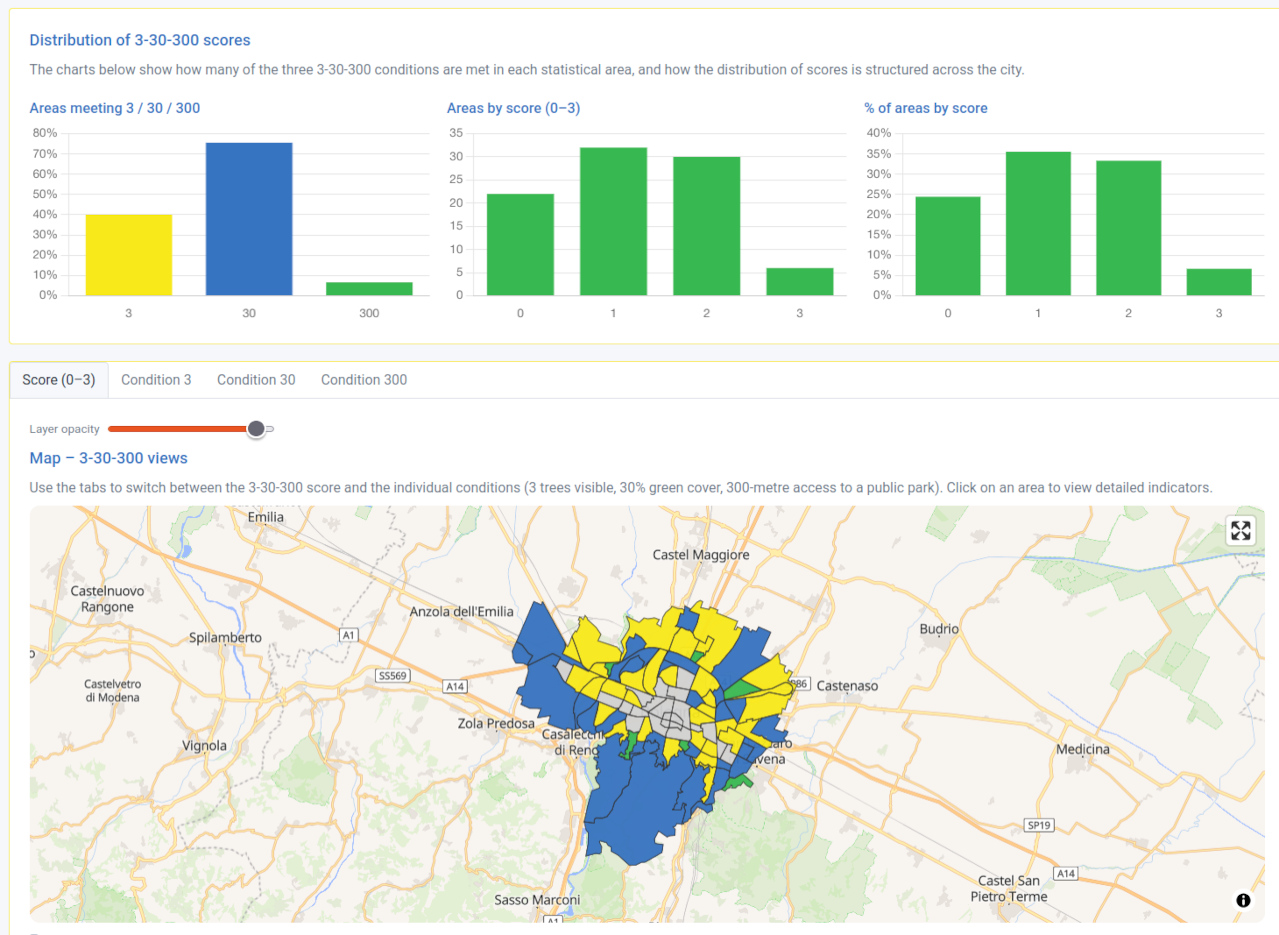
- Indicators of environmental sustainability and social inclusiveness
- Source code, datasets, and tools to replicate the model in other European cities
Explore it at: github.com/talea-platform
Team

Municipality of Bologna
Project coordinator, leading urban implementation and stakeholder engagement.
University of Bologna
Scientific research and methodology development.
Fondazione IU Rusconi Ghigi
Social innovation, citizen engagement, and co-design processes.
Fondazione Bruno Kessler
Expertise in digital technologies, AI, and participatory platforms.
CINECA
HPC and data processing, supporting computational modeling and digital twin development.
R2M Solutions
Innovation management, supporting exploitation, replication, and business models.
R3GIS
Geospatial software and tools for data visualization and analysis.
Municipality of Cluj-Napoca (Romania)
Replication city, implementing and testing solutions in Eastern Europe.
Municipality of Marseille (France)
Replication city, adapting and validating solutions in Southern Europe.
Municipality of Riga (Latvia)
Replication city, contributing insights from Northern European urban contexts.Frequently Asked Questions
Below you can find answers to some of the most common questions about the TALEA project and the TALEA Platform. If you don’t find what you’re looking for, feel free to visit our GitHub repository or contact the project team.
What is the TALEA project?
TALEA (Transformative Adaptation for Local Environmental Action) is an innovative European project co-funded by the European Urban Initiative – Innovative Actions (EUI-IA). It aims to transform cities into greener, fairer, and more climate-resilient places by combining nature-based solutions with digital technologies and participatory approaches.
Is it possible to replicate the tools developed within the TALEA Platform in other cities?
Yes! Most of the tools created for the TALEA Platform are fully replicable: all source code is released under an open license, and it leverages open data sources, making it easy for other cities to adopt, customize, and implement the tools for their own climate adaptation strategies.
What kind of data and tools are available on the TALEA Platform?
The TALEA Platform hosts interactive maps, environmental indicators, urban heat island analyses, climate shelter data, and open-source code to replicate these tools in other cities. All resources are designed to support evidence-based climate adaptation.
Who funds TALEA and how long will the project last?
TALEA is co-funded by the European Urban Initiative – Innovative Actions (EUI-IA), Call 2 – 2024. The project runs for 42 months, from December 2024 to May 2028.